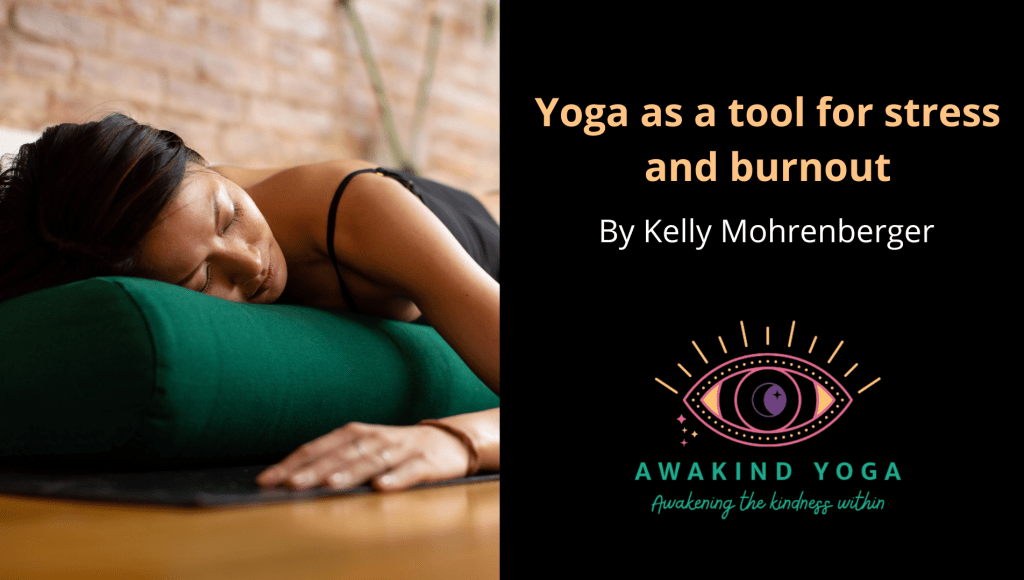
Modern life asks a lot of us. Full calendars, constant notifications, mental load, responsibilities, and the quiet pressure to always be on. Even when we stop moving, our nervous system often doesn’t rest. If you’ve ever felt exhausted but unable to fully relax, you’re not alone.
This is where yoga becomes powerful — not as indulgence, but as an essential practice for nervous system regulation.
When Rest doesn’t come easy
Many people assume relaxation means doing nothing. But for an overstimulated nervous system, stillness without guidance can feel uncomfortable or even stressful.
The classes I offer at Awakind Yoga provide structured rest — a way to gently and gradually guide the body and mind out of survival mode and into it’s optimal state.
With regular practice this shift supports:
• Reduced stress and anxiety
• Better sleep quality
• Improved focus and emotional regulation
• Increased capacity to stay present with mild discomfort — both on and off the mat
• A deeper sense of calm and resilience
Many people arrive believing they “can’t” slow down — until they experience what supported rest actually feels like.
Yin Yoga: Slowing the Body to Calm the Mind
Yin yoga is a slow, grounding practice where poses are held for longer periods, allowing the body to soften.
For overstimulated nervous systems, yin yoga:
• Signals safety through stillness and support
• Activates the parasympathetic (rest-and-digest) response
• Releases deep-held tension in connective tissue
• Encourages patience, presence, and letting go
By staying with sensation in a supported, non-forced way, yin yoga gently increases our tolerance for discomfort. Over time, the nervous system learns that discomfort doesn’t automatically mean danger — building resilience, patience, and trust in the body’s ability to cope.
You don’t need flexibility, strength, or experience — just a willingness to pause.
Meditation: Training the Nervous System to Rest
Meditation isn’t about stopping thoughts. It’s about changing our relationship with them.
Guided meditation offers the nervous system something steady to focus on, helping to:
• Reduce mental noise
• Create space between thoughts
• Lower stress hormones
• Build emotional awareness
• Build capacity to observe discomfort without reacting or becoming overwhelmed
For busy minds, guided practices feel more accessible than silent meditation — especially when paired with breath awareness, gentle cues and sound healing.
Sound Healing: Rest Beyond Thinking
Sound healing works on a level deeper than words.
Instruments like singing bowls create vibrations that the body responds to instinctively. You don’t need to do anything — the sound does the work.
Sound healing can:
• Calm the nervous system quickly
• Reduce muscle tension
• Support deep rest and sleep
• Help release emotional stress stored in the body
Many people experience a state similar to deep sleep, even if they struggle to relax normally.
Hatha Yoga: Steady Movement and Grounded Awareness
Hatha yoga offers a slower, mindful approach to movement, with a focus on matching breath to movement.
I also offer yoga with weights, a hatha-style practice using light weights. It combines mindful movement with gentle strength-building, supporting both the body and nervous system.
These practices:
• Encourages slow, intentional movement
• Builds functional strength without rushing or strain
• Supports confidence and body awareness
• Helps release stress by anchoring attention in the body
• Gradually builds tolerance for physical effort and sensation, without pushing past limits
These types of yoga are especially supportive for those who find complete stillness challenging, offering a grounded way to move, breathe, and settle before deeper rest.
Why These Practices Work So Well Together
Hatha yoga and yoga with weights gently engage the body and help increase flexibility, strength, and stability through breath-led movement. This helps gently discharge excess energy and brings the nervous system into a more balanced state.
Yin yoga then invites the body to slow down further, softening into stillness and releasing deeper layers of physical and mental tension.
Meditation and sound healing come together in a single session, using guided awareness and soothing vibrations to quiet the mind and support deep, natural rest.
Together, these practices create a layered experience of regulation and restoration — ideal for people who are busy, overwhelmed, or burnt out.
This combination is especially supportive if you:
• Feel wired but tired
• Have difficulty switching off
• Experience stress-related tension
• Want rest without performance or pressure
These practices don’t just promote relaxation — they gently train the nervous system to stay regulated in the presence of sensation, effort, and emotional discomfort, increasing resilience over time.
An Invitation to Rest
Rest is not something you earn after doing enough. It’s something your nervous system needs regularly to function well.
If your body has been asking for a pause, this may be your sign to listen.
Yoga is a practice for deep, sustainable rest — and for building the capacity to meet life’s discomfort with more steadiness and ease.
The Awakind Yoga studio is located in the leafy suburb of Tascott on the Central Coast of NSW. You can click here to learn more and book a class.
I’d love to see you on the mat soon.
Namaste.
…
Related Content:

Privacy Policy │Terms & Conditions
Copyright © 2024 Awakind Yoga. All Rights Reserved.
 Awakind Yoga